 +86 18296348816

 English
 Chinese
 German
 Spanish
 +86 18296348816
 All Uploads Are Secure and ConfidentialWritten by
Kat de Naoum
 1163 readPublished 2026-07-06
Ceramic 3D printing is one of the most exciting frontiers in additive manufacturing. While plastics and metals have dominated the AM landscape for years, technical ceramics — with their exceptional hardness, heat resistance, and chemical stability — are now becoming accessible through a range of specialized 3D printing technologies.
From aerospace nozzles that withstand 1200°C+ thermal shock to patient-specific dental implants and semiconductor manufacturing components, ceramic additive manufacturing is moving beyond the research lab and into production.
But ceramic 3D printing is fundamentally different from printing with plastics or metals. This guide explains how it works, what technologies exist, and when you should consider it for your project.
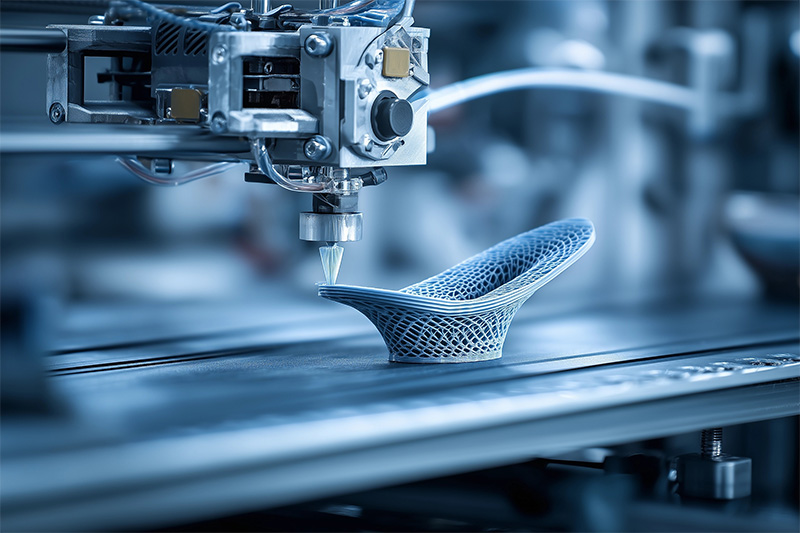
Ceramic 3D printing refers to additive manufacturing processes that produce three-dimensional objects from ceramic materials — typically alumina (Al₂O₃), zirconia (ZrO₂), silicon carbide (SiC), or silicon nitride (Si₃N₄).
Unlike polymer 3D printing, where the printed part is the final product, ceramic 3D printing produces a "green part" that must undergo post-processing — including debinding and high-temperature sintering — to achieve its final density, strength, and material properties.
How it works: A printhead selectively deposits liquid binder onto a ceramic powder bed. After printing, the "green part" is removed from the powder, then debound and sintered.
Materials in Ceramic 3D Printing
| Ceramic | Key Properties | Applications |
| Alumina (Al₂O₃) | High hardness, electrical insulation, wear resistance | Semiconductor components, medical implants, cutting tools |
| Zirconia (ZrO₂) | High strength, fracture toughness, biocompatibility | Dental crowns, orthopedic implants, knife blades |
| Silicon Carbide (SiC) | Extreme hardness, thermal conductivity, high-temperature stability | Aerospace nozzles, armor, heat exchangers |
| Silicon Nitride (Si₃N₄) | Thermal shock resistance, high strength | Turbine blades, bearing balls, engine components |
| Tricalcium Phosphate (TCP) | Biocompatible, resorbable | Bone scaffolds, synthetic bone grafts |
Key Advantages of Ceramic 3D Printing
· Complex geometries impossible with traditional methods – Internal channels, lattices, undercuts, and patient-specific shapes
· No tooling required – Eliminates mold costs for small-to-medium batches
· Material efficiency – Near-net shape with minimal waste
· Customization – Each part can be different without a cost penalty
· Performance – Can achieve >98% density and >350MPa flexural strength
· Multi-material potential – Functionally graded ceramics are possible
Is Ceramic 3D Printing Right for Your Project?
Ceramic 3D printing is not a replacement for traditional ceramic manufacturing — nor is it meant to be. It is a specialized solution for complex, high-value ceramic components that cannot be made — or cannot be made cost-effectively — using conventional pressing, casting, or machining.
If you need:
· Complex internal features or patient-specific geometries
· Small-to-medium volumes (1-1,000 parts)
· High-performance technical ceramics (alumina, zirconia, SiC)
· No tooling investment
If you need millions of simple ceramic parts at the lowest possible unit cost, traditional pressing and sintering remains the right choice.
Ready to Explore Ceramic 3D Printing for Your Project? Send us your CAD file (STEP/STP) with material requirements and quantity for a free feasibility assessment and quote.
1753 read1243 read


 info@yuntianmodel.com
cassidy@yuntianmodel.com
info@yuntianmodel.com
cassidy@yuntianmodel.com
 +86 18296348816
 +86 0769-22000869
 1st Floor, Building 2, No.123, Datang Road, Dalingshan Town, Dongguan City, Guangdong Province, China,523820
