 +86 18296348816

 English
 Chinese
 German
 Spanish
 +86 18296348816
 All Uploads Are Secure and ConfidentialWritten by
Kat de Naoum
 1245 readPublished 2026-07-06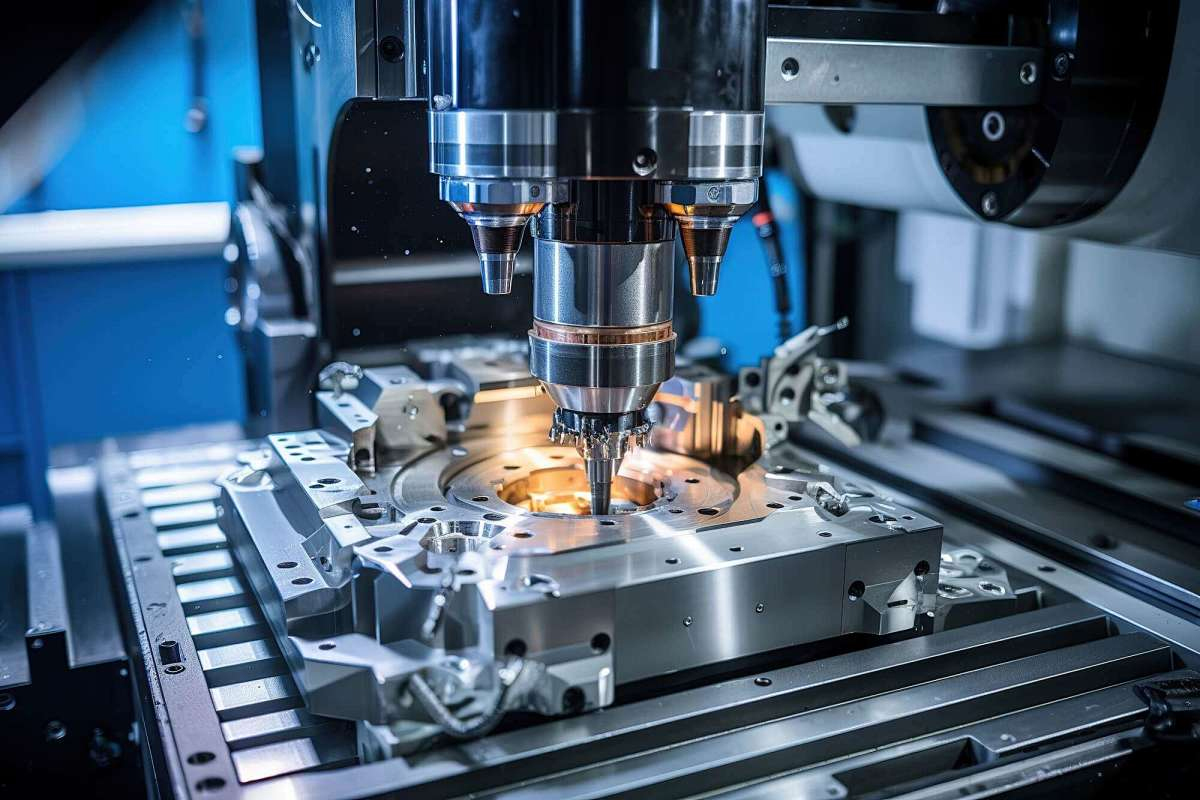
In today's fast-paced manufacturing world, choosing the right process directly impacts product development lead time, cost, and final quality. As a full-service partner, we specialize in CNC machining, 3D printing, sheet metal fabrication, vacuum casting, die casting, injection molding, and surface finish. From Prototyping to high-volume production, this guide explains each process and helps you make informed decisions. Here we cover CNC machining, 3D printing, and sheet metal fabrication. These services that do not require molds.
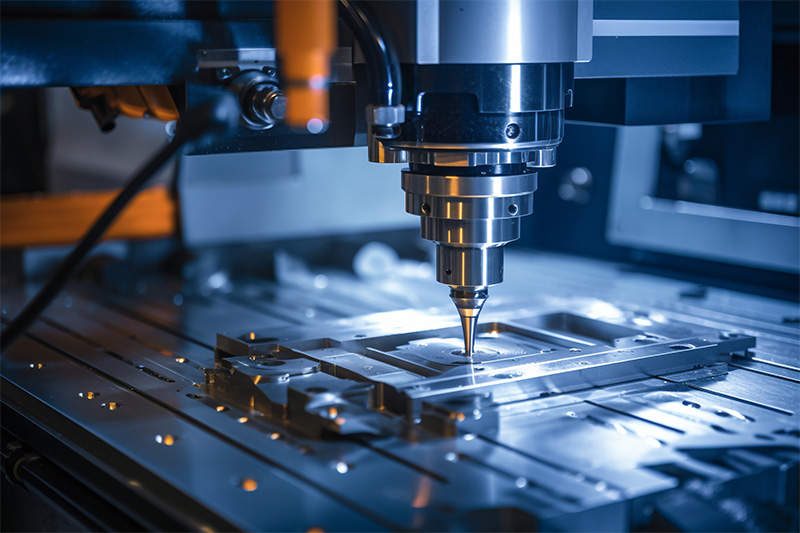
CNC (Computer Numerical Control) machining removes material from a solid block using milling, turning, drilling, and other operations. It works with metal (stainless steel, aluminum, brass, copper, bronze, etc.) and engineering plastic (PC, PEEK, POM, PA+GF, ABS, etc.).
Key advantages:
· Tolerance down to ±0.005mm, surface finish Ra≤0.8μm
· No mold required-ideal for low to medium volumes and complex geometries
· High material utilization and capable of large parts
Typical application: aerospace components, medical devices, custom fixtures, automotive prototypes, etc. For functional parts that need fast iteration, CNC offers excellent value.
2. 3D printing/Additive Manufacturing
3D printing builds parts layer by layer directly from a CAD file. It excels at complex internal channels, conformal cooling, and lightweight lattice structures. Whether it is a drone frame, a surgical guide, or a custom heat exchanger, 3D printing delivers fast.
Our 3D Printing Portfolio:
SLA: Smooth resin parts for visual prototypes and investment casting patterns.
SLS: Nylon or glass-filled powder-strong, durable parts for functional testing.
SLM/DMLS: Metal printing (aluminum, stainless steel, titanium) with ≥99.5% density for end-use metal parts.
FDM: Thermoplastic filaments (ABS, PETG, PC, etc.). Cost-effective for large, simple prototypes and jigs.
MJF: HP's industrial technology for nylon (PA12). Produces isotropic, dense parts with fine detail and excellent mechanical properties-ideal for functional serial production without molds.
Ceramic 3D Printing: Lithography-based or paste extrusion for alumina, zirconia, etc. Used in high-temperature, biocompatible, or insulating components.
Key Advantages:
· zero tooling cost-perfect for low volumes and customization
· unlimited design freedom-unrestricted geometric complexity (internal channels, lattices)
· short lead time as fast as 1-3 days
Sheet metal processing includes laser cutting, punching, bending, welding, forming and stamping. It transforms metal sheets into cost-effective, rigid structures.
Key advantages:
· Fast turnaround-no complex tooling needed
· Secondary operations: tapping, countersinking, riveting
Typical products: control cabinets, instrument housings, brackets, chip conveyors, EV battery boxes, etc.
Ready to discuss your project? Sending us your CAD file and drawing, and we will reply with the optimal process recommendation.
1163 read1755 read


 info@yuntianmodel.com
cassidy@yuntianmodel.com
info@yuntianmodel.com
cassidy@yuntianmodel.com
 +86 18296348816
 +86 0769-22000869
 1st Floor, Building 2, No.123, Datang Road, Dalingshan Town, Dongguan City, Guangdong Province, China,523820
